Church Interpreter vs. AI Translation: What Churches Should Use for Live Services
Two ways to carry one sermon across language barriers — and where they work together.
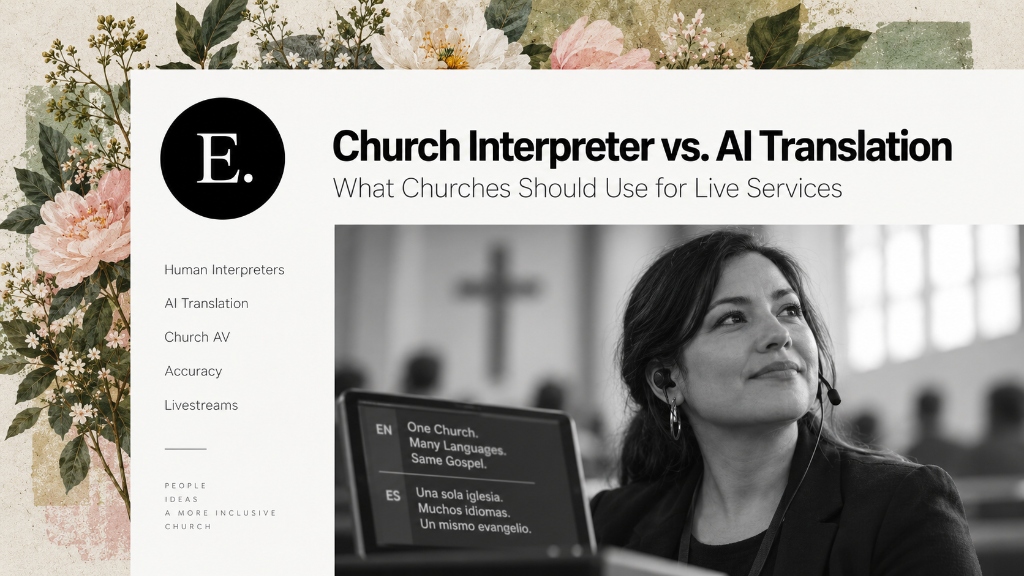
Church translation provides spoken ministry, announcements, prayers, and sermons in languages that people can hear. It is essential in congregations where people from different first languages worship in one service. A church interpreter can translate speech live, while newer systems produce translated audio and captions through software.
The right choice depends on language needs, budget, theology, AV resources, and service format. This guide compares human interpreters, AI translation, church AV setups, smartphone access, costs, accuracy, and livestream options to help ministry leaders choose the best path forward.
What Church Translation Looks Like Today
A multilingual church service could welcome immigrants, international students, mixed-language families, first-time visitors, or remote online viewers. One Sunday might require Spanish. A conference may need several languages at once.
Traditional simultaneous interpretation for churches uses an individual listening to the speaker and translating in real time. The interpreter typically works from a soundproof booth or quiet back room. Their microphone feeds a wireless transmitter, which broadcasts the audio to dedicated receivers distributed in the foyer.
Attendees wear church translation headsets connected to those receivers. While a wireless translation system for church can work well in a single sanctuary, it also introduces an equipment workflow involving inventory checkouts, sanitizing, charging, battery replacement, and frequency coordination.
Yet this model remains prized when doctrine or pastoral sensitivity demands delicate human judgment. Skilled human interpreters can grasp humor, emotional weight, cultural idioms, and biblical phrasing that simple automated tools might miss.
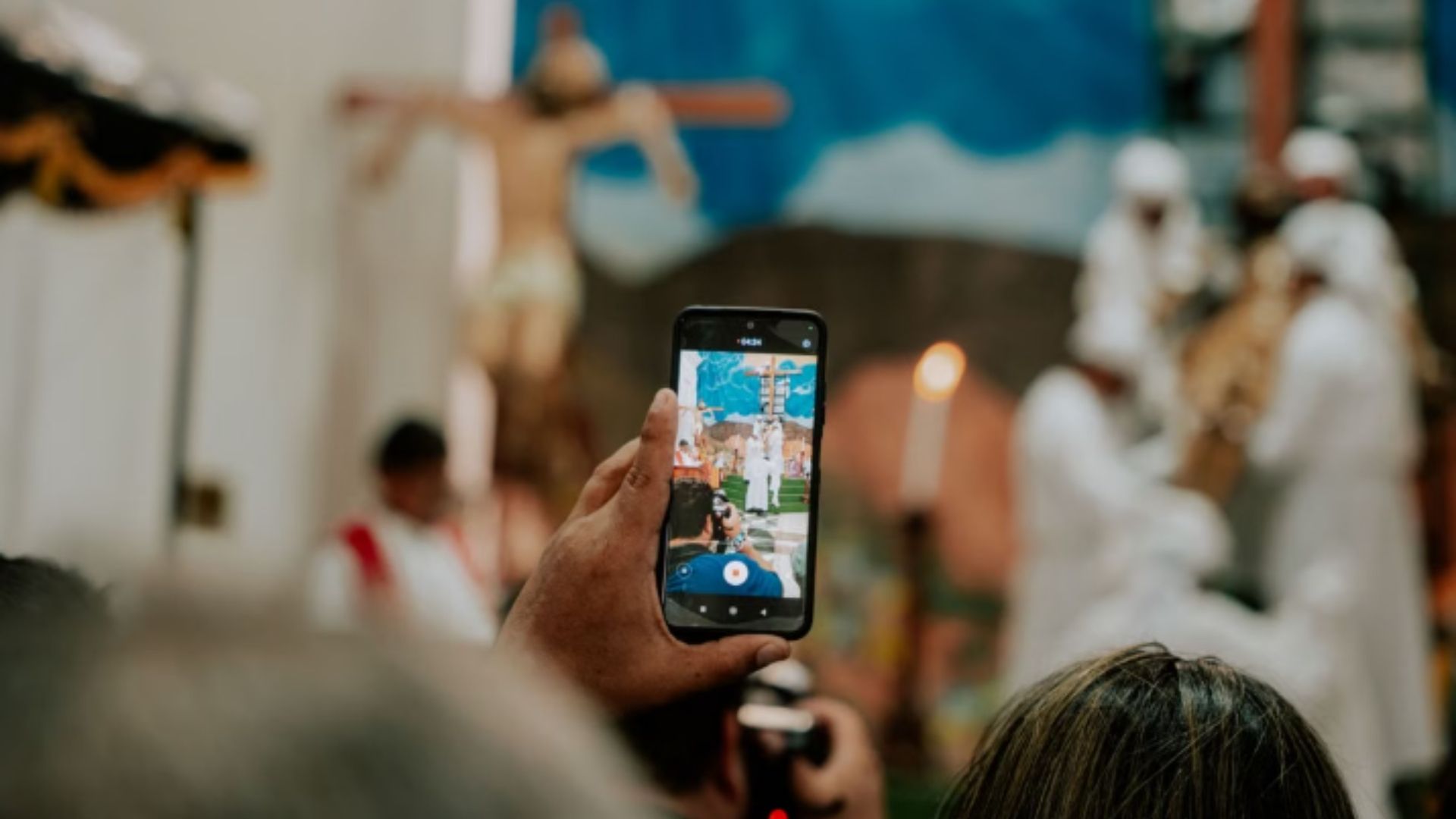
Human Interpreters, Booths, and Translation Hardware
A traditional church interpretation system usually consists of four essential parts: an interpreter, a dedicated microphone, an RF transmitter, and listener receivers. Larger churches often install a dedicated interpretation booth so the volunteer or hired professional can hear the pulpit audio with isolation without bleeding their translated speech into nearby pews.
Professional translation equipment for churches can deliver dependable in-room audio without requiring mobile phones or Wi-Fi. However, maintaining this setup demands continuous operational overhead:
- Hardware logistics: Churches must maintain spare units, multi-dock charging stations, and backup headsets.
- Staffing requirements: Volunteers must distribute, log, collect, sanitize, and recharge receivers every single week.
- Multi-language bottlenecks: Serving 40 Spanish speakers and 20 Vietnamese speakers requires 60 receivers, multiple transmitters, and multiple dedicated interpreters simultaneously.
- Interpreter preparation: A church translator relies heavily on sermon outlines, Bible references, proper nouns, and theological background provided well before the service starts.
How AI Church Translation Works
Modern AI translation for churches changes the physical delivery path. Instead of routing one human interpreter into dedicated radio receivers, speech-to-speech AI software converts the pastor’s spoken words directly into translated voice and real-time captions.
A standard AI translation workflow operates through four streamlined stages:
- Audio capture: The church microphone or digital sound console sends a clean speech feed into a computer or audio interface.
- Live transcription & translation: Neural speech recognition transcribes the pastor’s words and translates them into the target languages.
- Natural voice synthesis: Text-to-speech models synthesize natural, low-latency translated voice streams.
- Personal device delivery: Attendees listen to high-fidelity audio, read live synchronized captions, or both directly on their personal smartphones.
This architecture supports real-time church translation across dozens of languages at the same time. Speech-to-speech translation serves worshippers who want to listen with earbuds, while live text captions support those with hearing difficulties or ESL learners. Exbabel operates through this browser-based model: attendees scan a QR code on a seat card or bulletin, choose their language, and follow the message with no app download required.
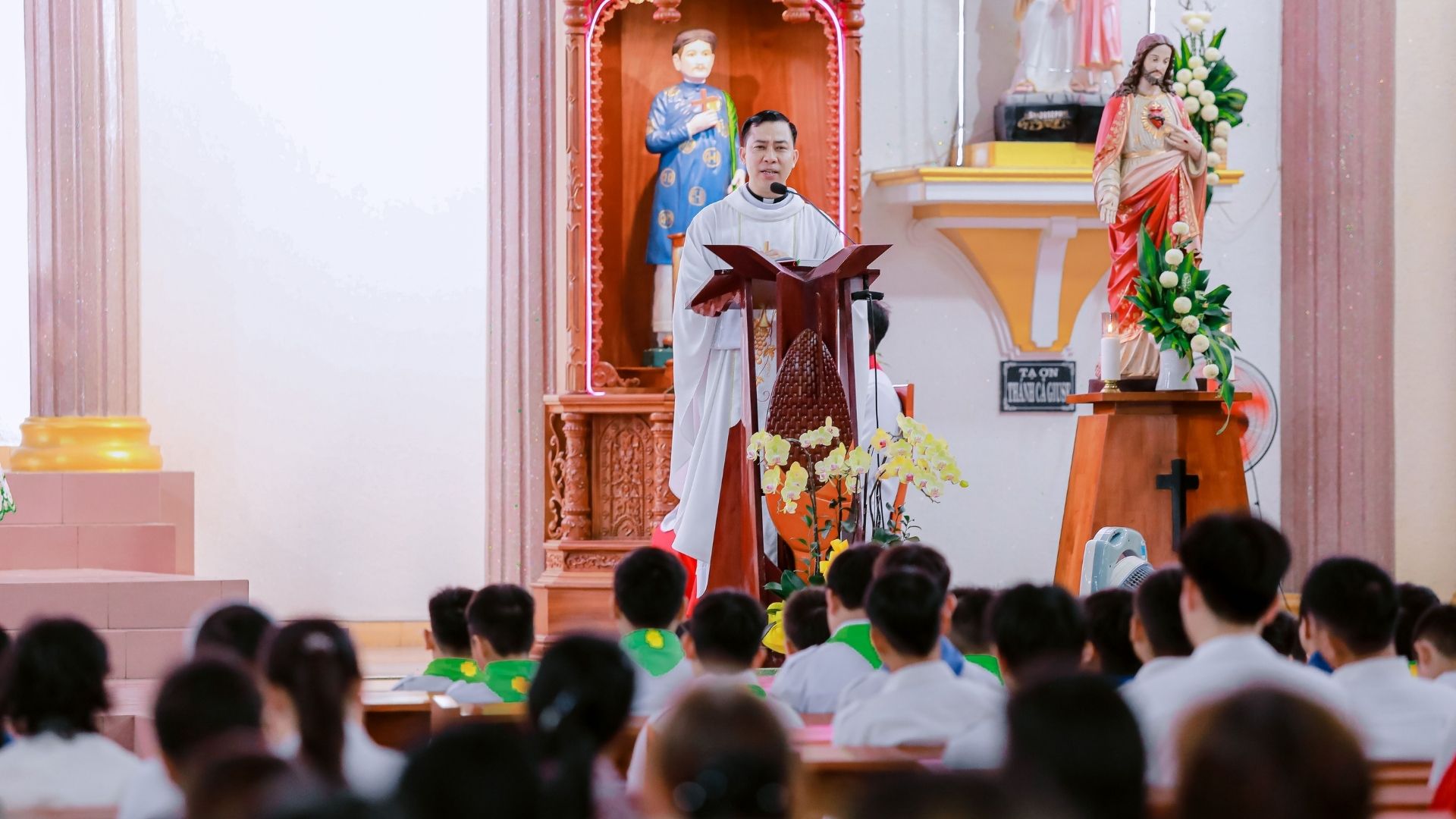
Live Audio, Captions, and Smartphone Access
Live audio translation allows congregants to absorb the sermon naturally without staring at a screen throughout worship. At the same time, synchronized live captions provide a vital visual aid for hearing-impaired members and older attendees. Offering both formats simultaneously ensures that worshippers never miss unfamiliar names, Scripture citations, or historical references.
Transitioning to smartphone-based church translation eliminates the bottleneck of physical receiver distribution. QR codes can be positioned strategically on seat backs, welcome desk signs, sanctuary screens, or printed service programs. A visitor opens their camera, taps the link, selects their native language, and inserts their personal earbuds.
At a church conference or multi-denominational retreat, the exact same system can broadcast to Spanish, Portuguese, Korean, Vietnamese, and French attendees simultaneously without stocking hundreds of RF headsets. Latency is central to this experience: Exbabel benchmarks show sub-second caption delivery and roughly one-to-two-second speech translation, documented in our comprehensive independent latency benchmark report.
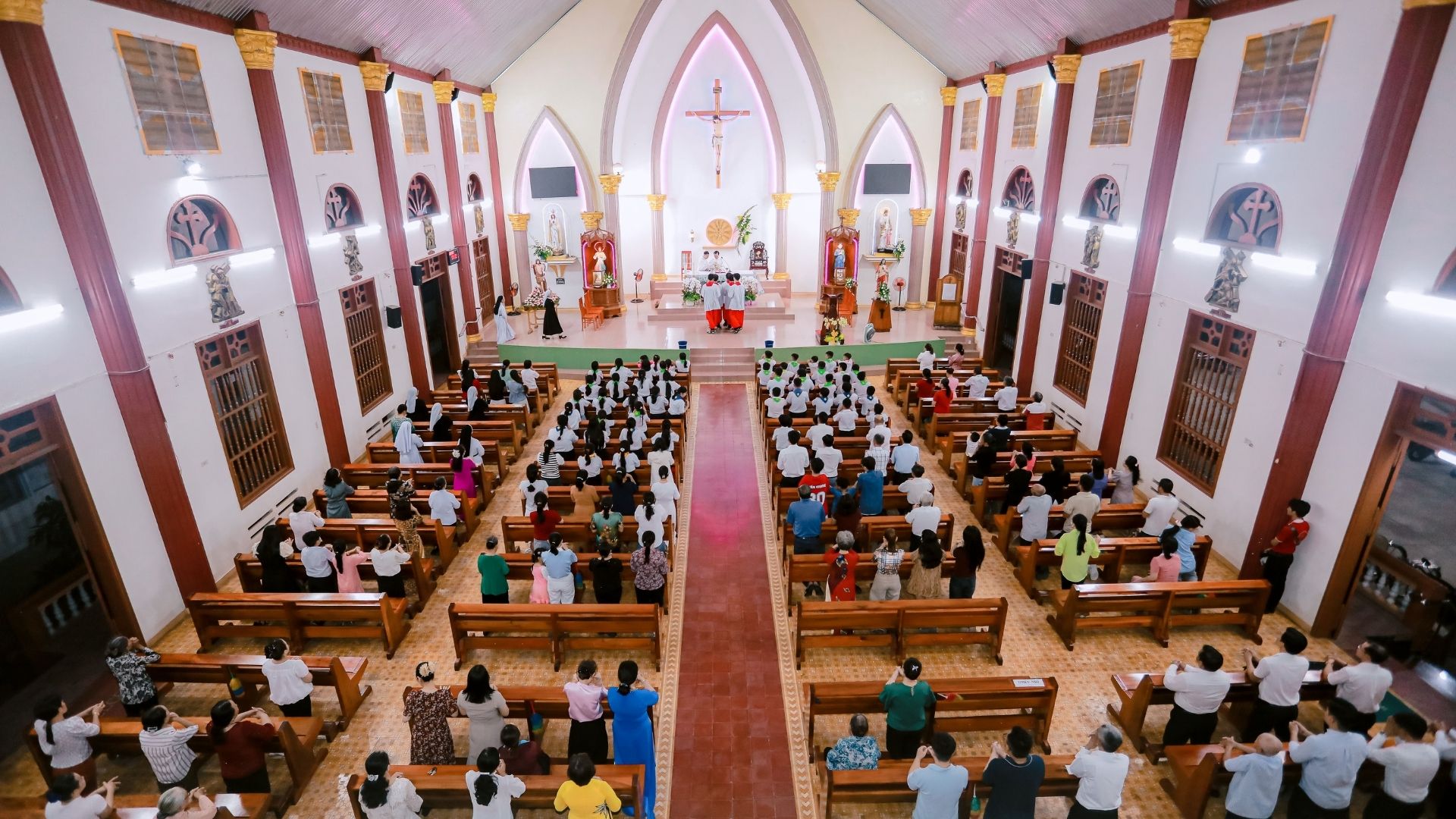
Connecting Translation Software to the Church Sound System
High-quality translation begins long before an AI model processes a single phrase. Poor microphone placement, signal clipping, sanctuary reverberation, and ambient house music degrade automated transcription. For church AV teams, the golden rule is routing the cleanest possible speech signal from the console.
A dedicated auxiliary (AUX) or matrix bus output on your digital mixer allows the sound engineer to isolate the pastor’s vocal mic from live drums, acoustic guitars, congregational noise, and room mics.
Standard Church AV Audio Routing Workflow
Smaller church ministries can use a direct USB microphone or an inexpensive audio interface. Broadcast teams streaming on OBS Studio or vMix can route their audio output directly into Exbabel using virtual audio cables. For complete connection schematics and hardware recommendations, see our detailed church translation system implementation guide.
Translating English Sermons Into Spanish and Other Languages
Spanish church translation is the primary starting point for thousands of congregations across the United States and the Americas. Consider a typical service with 25 to 50 Spanish-speaking worshippers: the AV operator routes the pastor’s audio into the translation platform, attendees scan a QR code on the pew card, select Spanish, and listen through their earbuds or read live Spanish captions.
This approach welcomes Spanish-speaking families into the heart of the main worship service rather than segregating them into a separate fellowship hall or a second service. Over time, the exact same setup easily expands to Portuguese, Korean, Mandarin, Vietnamese, Arabic, or Ukrainian as community demographics shift.
Live sermon translation presents unique linguistic challenges. Fast-paced speech, sudden rhetorical shifts, colloquial illustrations, and archaic biblical syntax test both human interpreters and AI models. Pre-service preparation — such as configuring custom glossary terms for theological concepts and proper nouns — significantly enhances translation accuracy.

Church Interpreter vs. AI Translation: Detailed Comparison
The best church translation system is not automatically the newest technology. Ministry leaders must carefully evaluate their church’s size, doctrinal priorities, linguistic makeup, and AV capacity.
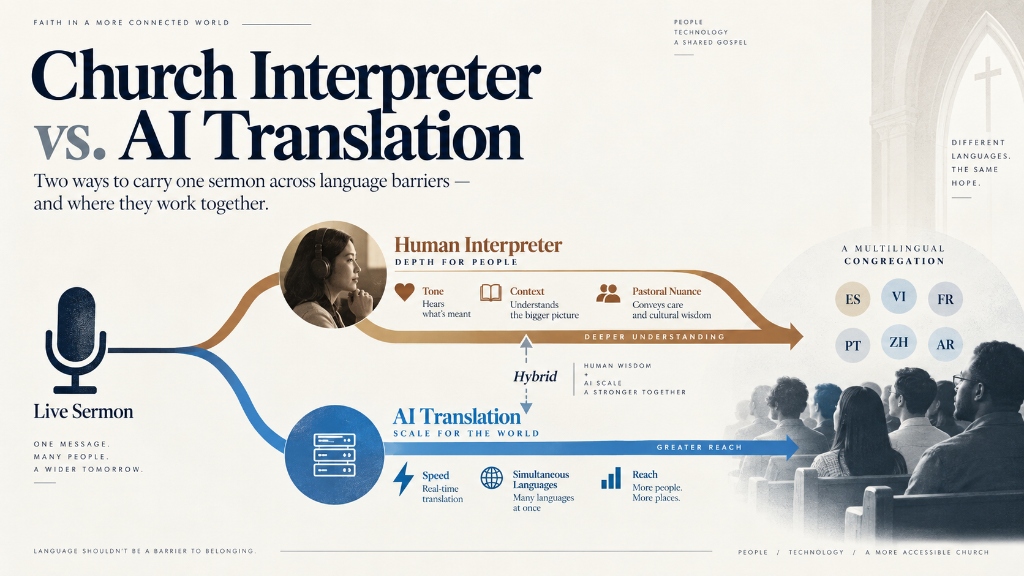
Human church interpreters bring unmatched cultural wisdom, pastoral empathy, and immediate discernment of theological nuance. They hear what is meant behind what is spoken. Conversely, AI translation excels at real-time speed, cost efficiency, and boundless scalability across dozens of languages without requiring extra booths or volunteer recruitment.
| Evaluation Factor | Human Church Interpreter | AI Translation Platform |
|---|---|---|
| Cultural nuance | Exceptional when working with an experienced interpreter from the community. | Strong on general context; depends on language pair and theological glossary. |
| Theological judgment | Deep discernment when the interpreter understands church doctrine. | Requires terminology validation for complex doctrinal phrases. |
| Language expansion | Requires recruiting, vetting, and scheduling additional bilingual volunteers. | Instant support for 180+ languages without additional personnel. |
| Weekly scheduling | Subject to volunteer burnout, illness, vacations, and scheduling conflicts. | Always available on-demand whenever the AV mixer feed is live. |
| Listener hardware | Requires dedicated RF transmitters, receiver packs, and headsets. | Congregants use their own smartphones, personal earbuds, and QR codes. |
| Internet dependence | Operates offline on local RF radio frequencies without internet. | Cloud-based processing requires a reliable Wi-Fi or cellular connection. |
| Live captions | Requires a separate stenographer or captioning workflow. | Simultaneous synchronized captions generated alongside voice streams. |
| Cost structure | Labor fees ($50–$150/hr if hired) plus recurring equipment maintenance. | Predictable SaaS subscription; plans start at $39/month. |
The Hybrid Model: Many growing churches find that the most effective strategy is a hybrid deployment. Experienced human interpreters translate the primary language (such as Spanish) during key pastoral moments, while Exbabel handles simultaneous translation into Korean, Vietnamese, French, and Portuguese, expanding the church’s global reach without exhausting volunteer teams.
Software vs. Traditional Equipment, Costs, and Church Size
When assessing church translation systems, leadership should calculate the total operational workload, not just the initial sticker price. Traditional hardware investments require transmitters, beltpack receivers, multi-unit charging cases, replacement earphones, sanitary covers, and regular battery upkeep. Over a 3-year period, hardware maintenance and lost receivers can easily exceed thousands of dollars.
In contrast, a browser-based translation platform like Exbabel moves the investment into scalable software. With our Starter plan beginning at $39 per month, smaller churches eliminate the capital expenditure of buying dozens of receivers. A volunteer AV team can launch a service in minutes without managing a physical inventory desk.
For larger multi-site campuses or megachurches, software platforms provide multi-channel flexibility, redundant cloud routing, and unified livestream feeds across satellite locations, often paired with professional interpreters for primary keynote messages. For deeper cost comparisons with live event interpreters, explore our analysis of on-demand interpretation services vs. human interpreters.

Church Livestream Translation and Theological Accuracy
Church livestreaming extends ministry far beyond sanctuary walls. However, online viewers cannot pick up an RF receiver in the lobby. They require translated audio feeds or synchronized captions that they can open seamlessly in a web browser on their computer, phone, or smart TV. Exbabel integrates with standard church broadcast software like OBS Studio and vMix via RTMP and virtual audio, as detailed on our Exbabel Live broadcast platform.
Accuracy demands rigorous attention during worship. Common theological terms — including “grace,” “justification,” “sanctification,” and “communion” — carry doctrinal definitions that generic consumer translation tools often mistranslate. Similarly, Scripture citations (e.g., “First Corinthians chapter thirteen”) and biblical proper names require precise models.
To safeguard theological fidelity, ministries should:
- Feed isolated speech directly from the sound console to minimize transcription errors.
- Incorporate custom glossaries for recurring denominational terms and sermon series themes.
- Conduct pre-service dry runs with native-speaking leaders to confirm biblical translation tone.
- Rely on qualified human interpreters for sensitive ordination ceremonies or communion reflections.
How to Choose and Set Up a Church Translation System
Begin by assessing your congregation’s real needs. Survey regular attendees, calculate the number of non-native speakers, examine community demographics, and note online streaming viewers.
Follow this eight-step implementation checklist for a seamless launch:
- Identify language priorities: Determine which languages require live spoken voice streams, text captions, or both.
- Optimize pulpit audio: Verify microphone technique and create a dedicated AUX bus on your mixer isolated from house music.
- Evaluate budget & labor: Compare volunteer interpreter availability against the predictable costs of software subscriptions.
- Conduct a full rehearsal: Run a complete midweek rehearsal using recorded sermon audio or pastoral speaking tests.
- Validate theological terms: Verify book names, accents, theological vocabulary, and scripture transitions.
- Deploy attendee touchpoints: Place clean QR code signage at welcome tables, bulletin inserts, and on-screen slides.
- Prepare a backup protocol: Ensure volunteers know how to switch audio feeds or fall back if internet speeds drop.
- Gather congregation feedback: Interview native-speaking members after the first three services to refine audio levels and language settings.
Frequently Asked Questions
1. Can AI translate a church service live?
Yes. Modern AI systems can capture speech from a church mixer, transcribe the spoken words, translate the message, and deliver real-time synthesized voice and synchronized captions during the service with minimal latency.
2. Do churches still need translation headsets?
Not necessarily. While RF headsets remain useful for worshippers who do not own smartphones or in venues lacking reliable internet, browser-based platforms like Exbabel allow attendees to listen on their own smartphones using personal earbuds.
3. Can attendees use their own earbuds?
Yes. When using a web-based translation platform, attendees simply scan a QR code and connect their personal Bluetooth or wired headphones. This completely eliminates hardware checkouts and sanitization.
4. Is AI accurate enough for Bible teaching?
AI translation handles standard sermons and conversational ministry speech with high reliability. For doctrinally dense teaching, churches should use dedicated speech feeds and configure custom terminology glossaries. Human interpreters remain valuable when pastoral nuance requires nuanced doctrinal judgment.
5. What should a church test before launch?
Before Sunday morning, test audio isolation from the mixer, network stability in the back rows, QR code accessibility, speech latency, target language selection, and volume levels on both iOS and Android devices.
Make Every Service Understandable
Churches now have more ways than ever to welcome worshippers from every language background. Human interpreters remain irreplaceable when pastoral presence and cultural context are paramount. Meanwhile, real-time AI translation unlocks unprecedented scale, enabling churches of any size to broadcast in dozens of languages without maintaining expensive hardware inventories.
The ideal path often combines both: empowering your human interpreters for primary ministry while deploying AI to broaden your congregation’s reach. To test real-time smartphone translation with your church AV team, start a free trial, explore Exbabel Live, or schedule a consultation with our audio engineering team.
Related Resources & Field Guides
How Exbabel Works
Step-by-step audio pipeline from mixer AUX bus to attendee mobile devices.
Exbabel Live
Real-time speech-to-speech livestream translation with synchronized subtitles.
Latency Benchmark Report
Independent empirical evaluations measuring end-to-end translation latency.
Schedule a Demo
Discuss sound system connections and multi-language setups with our team.
AI Church Translation System for Live Services
Exbabel is a church translation system that turns live speech into translated audio and captions dur...
The Complete Guide to On-Demand Interpretation Services: How...
A new category of on-demand interpretation services, powered by AI, is rewriting the economics and l...