AI Church Translation System for Live Services
Every voice. Every language. One service.
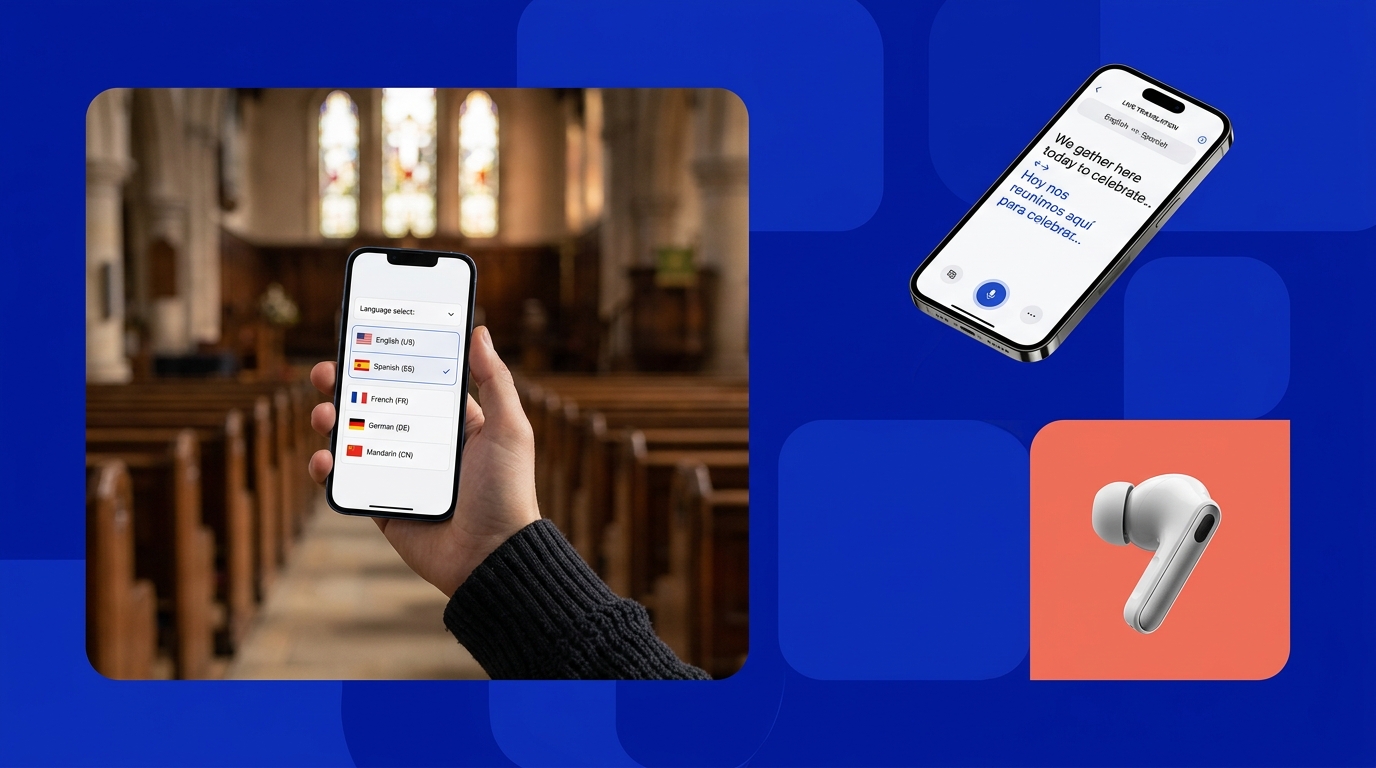
Exbabel is a church translation system for pastors, administrators, AV teams, production managers, and multilingual ministry leaders. It turns live speech into translated audio and captions during the service.
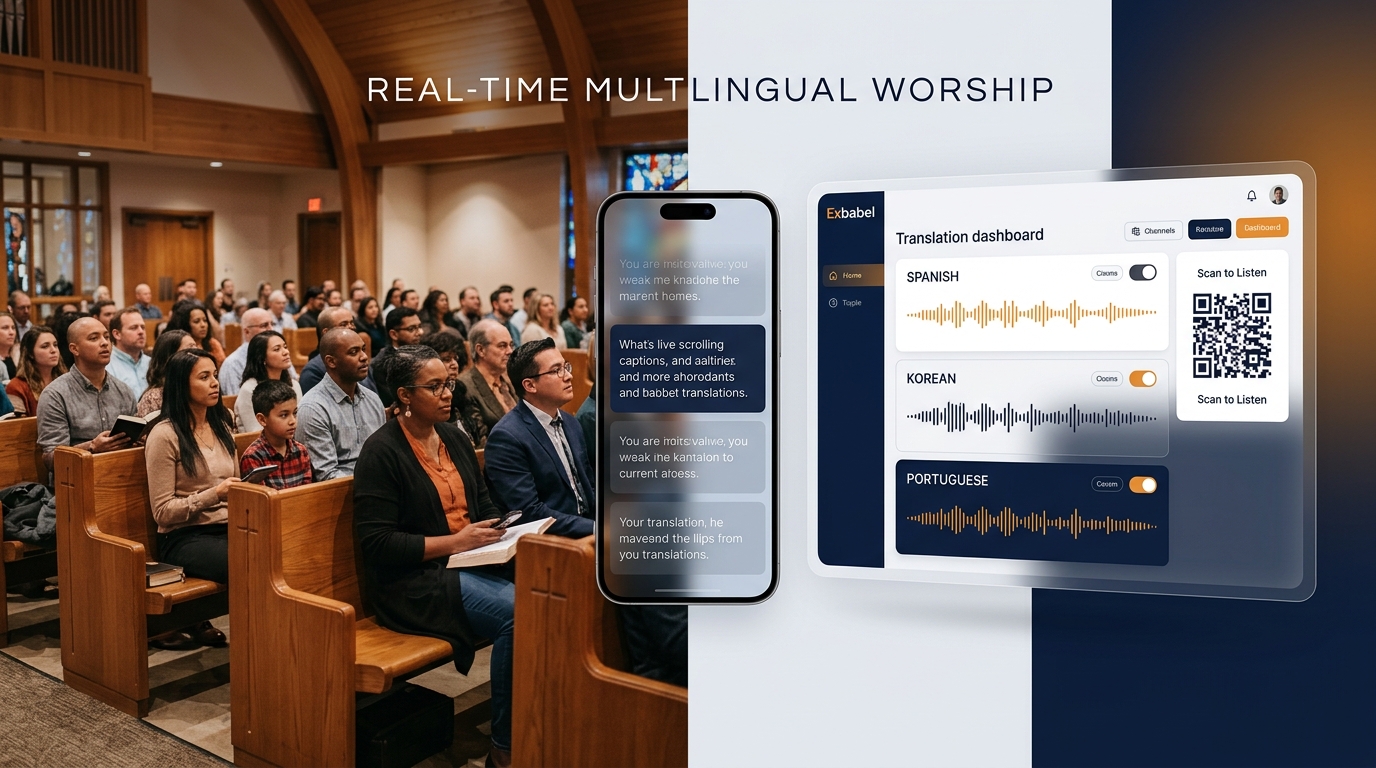
Attendees use their own tablets, phones, or laptops. They scan a QR code or open a web link, choose a language, and follow the message without downloading an app or using a dedicated receiver.
What Is a Church Translation System?
A church translation system delivers a speaker’s message in another language. Traditional setups use a human church interpreter, transmitter, wireless receivers, and translation headphones for church attendees.
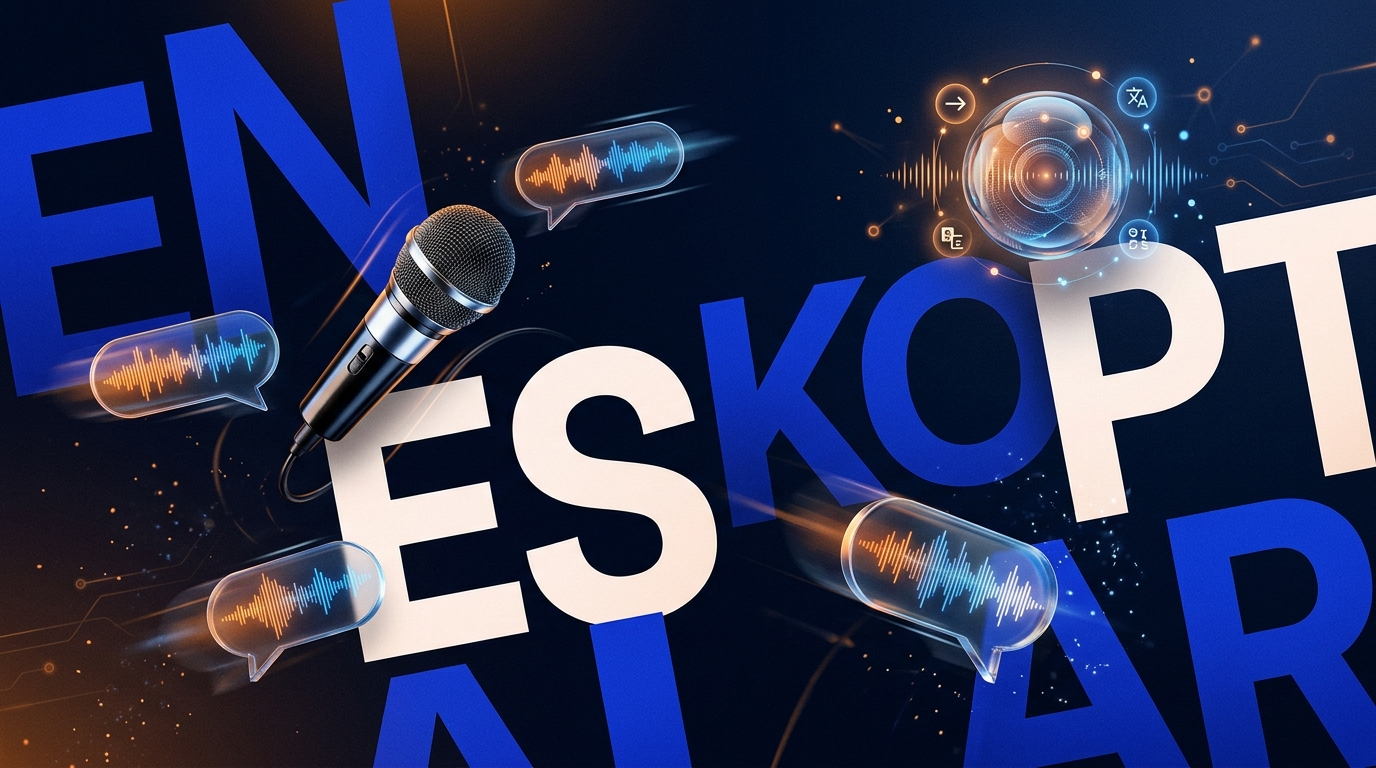
Exbabel adds a real-time AI option. A pastor speaks into a microphone or livestream. Exbabel transcribes the speech, translates it, and delivers voice translation or live captions. Multiple languages can run at once, making sermon translation possible in the room, online, or both.
Why Churches Need Multilingual Translation
Congregations may include immigrant families, international students, refugees, visitors, and children who understand different languages. When people miss a sermon, prayer, or announcement, they can feel separated from the church community.
Church translation helps your church:
- Welcome multilingual visitors.
- Keep families worshipping together.
- Serve Spanish, Korean, Portuguese, Farsi, and other language groups.
- Support online viewers, ESL audiences, and people who are deaf or hard of hearing.
- Reach international viewers through livestreams.
- Reduce weekly interpreter scheduling.
Traditional Translation Equipment for Churches
In a traditional system, the sound team sends the pastor’s audio to a church interpreter. The interpreter delivers the translated speech through a separate microphone. A transmitter sends it to wireless receivers, and attendees listen with earbuds or translation headphones.
This model offers human judgment and cultural context. It may also require interpreters, transmitters, church translation equipment, receivers, headphones, charging stations, frequency checks, and regular maintenance. Hardware supports in-room listeners but usually does not solve online translation.
How Exbabel AI Church Translation Works
Exbabel uses real-time speech-to-speech translation:
- Capture: Connect a microphone, mixer feed, or livestream.
- Process: Exbabel transcribes and translates speech continuously.
- Deliver: Listeners receive translated audio, captions, or both.
- Share: Attendees scan a QR code or open a link.
Exbabel reports translated speech in approximately two seconds and live captions in approximately one second. Low latency matters because long delays make sermons, prayers, and announcements difficult to follow.
The platform supports more than 200 languages and dialects overall. Voice availability varies by language and plan, while captions may cover more languages than AI voice output. Confirm your priority languages before launch.
Live Captions and Sermon Translation
Live captions display a translated sermon as text on a phone, in a browser, or in a livestream player. They help people who prefer reading, viewers in noisy spaces, and people who are deaf or hard of hearing.
AI voice translation lets attendees hear the sermon in their chosen language while watching the same service. It can also support announcements, conferences, youth events, and international ministry.
Church Livestream Translation
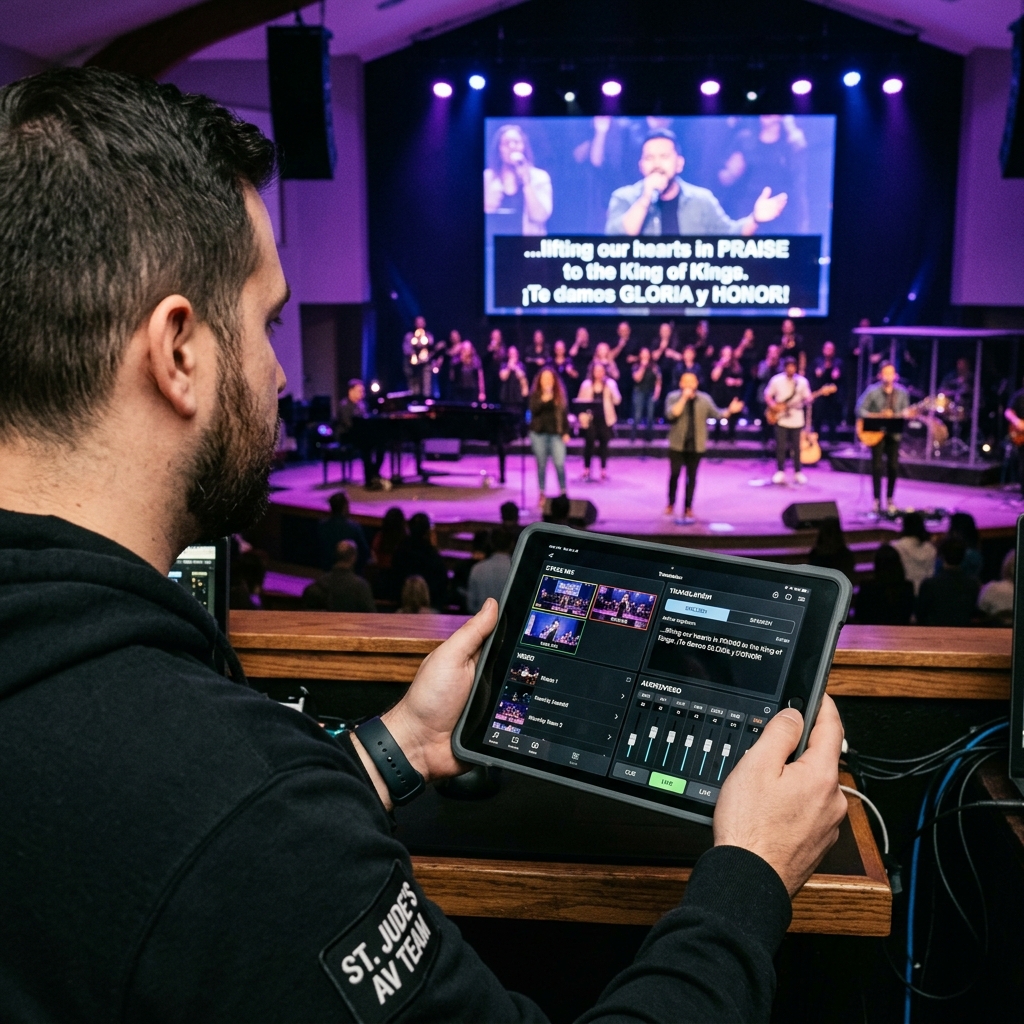
Exbabel can add translation without rebuilding your livestream. The Live Video Translation workflow supports OBS Studio, vMix, Wirecast, RTMP encoders, hardware streaming appliances, YouTube Live, Facebook Live, HLS playback, and custom church apps.
For professional productions, enter an Exbabel RTMP URL in your encoder or provide a supported stream URL. Exbabel processes the audio and creates translated voiceovers and captions. Embed the multilingual player on your website or route translated HLS feeds into an existing church app.
Connect Exbabel to Your Church AV System
Exbabel works with many existing church AV workflows.
Mixer and USB Audio Interface Workflow
Send a clean feed from the church mixer to a computer. A USB audio interface can carry it into the browser or Exbabel session. Use the pastor’s microphone, program mix, or a dedicated auxiliary output. A separate, balanced speech feed helps reduce music, feedback, and room noise.
Browser and Microphone Setup for Smaller Churches
A smaller church can start with a computer, a Chrome browser, a stable internet connection, and a microphone. The broadcaster workflow lets an operator select an audio input and languages, start broadcasting, download a listener QR code, and adjust latency.
Because listeners use a browser, Exbabel can act as a church translation app alternative without requiring downloads.
RTMP Setup for Professional Productions
If your church uses OBS, vMix, Wirecast, or another RTMP encoder, connect that stream to Exbabel Live. Keep your cameras, overlays, switching, and livestream destination, and add translated audio and captions.
Phones, QR Codes, and Translation Headphones
Display a QR code on a sanctuary screen, printed card, welcome desk sign, or livestream page. A listener chooses a language and listens through a phone or tablet with headphones.
Smartphone access can reduce the need for specialized receivers, batteries, storage, and charging stations. Translation headphones for church services may still help people without smartphones, children, or venues that control listening equipment.
Human Interpreter vs. Hardware vs. AI
Choosing the best church translation system requires weighing cost, complexity, and scale.
| Feature | Human Interpreter | Traditional Equipment | Exbabel AI |
|---|---|---|---|
| Setup | Recruit and schedule people | Install and manage hardware | Start from a browser |
| Listening | Receivers and headphones | Receivers and headphones | Phones, tablets, or laptops |
| Languages | Available interpreters | System channels | 200+ languages and dialects; voice availability varies |
| Accessibility | Usually audio | Usually audio | Live audio plus captions |
| Online reach | Extra coordination | Often sanctuary-focused | Livestream and RTMP workflows |
| Cost factors | Staff time | Hardware and maintenance | Subscription, usage, audio, and internet costs |
Church Translation Costs
Pricing depends on language count, service hours, audience size, latency, and whether you need in-room translation, livestream translation, or both.
Traditional systems may include interpreter fees, receivers, transmitters, headphones, installation, and maintenance. Exbabel Live is listed at $29 per month plus $10 per hour per language. Other plans include different live and solo hour allowances.
Compare your current interpreter and hardware costs with the number of services and languages you support. Exbabel offers a transparent pricing plan designed to scale with the needs of a ministry, from small church plants to international organizations.
- Starter ($39/mo): Includes 6 hours of live translation, supporting 200+ languages and 60 premium voices.
- Pro ($99/mo): 12 hours of live translation with 50% faster speeds and 90 premium voices.
- Unlimited ($299/mo): 36 hours of live translation, world-class lifelike voices (ElevenLabs), and custom branding.
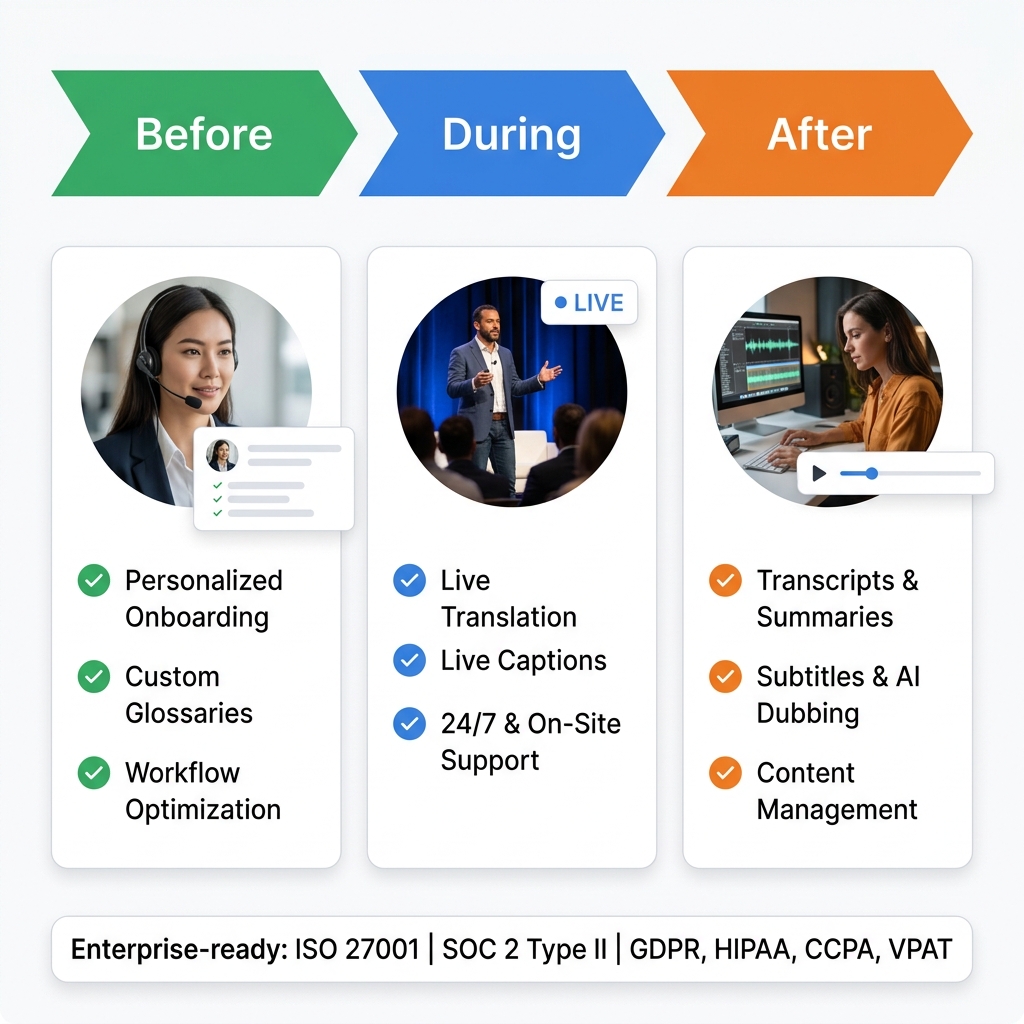
Enterprise-Grade Security and Reliability
When a church service only happens once, reliability and privacy are paramount. Exbabel is built for mission-critical live events and follows ISO 25010 and IEEE 829 testing guidelines.
- Privacy-First Processing: Audio streams are processed in real time and are not stored permanently unless you explicitly enable recording features. Exbabel implements encryption in transit and at rest.
- Broadcast-Safe Playback: The streaming engine includes automatic failover, stream recovery protection, intelligent buffering, and network resilience to handle fluctuating internet speeds common in older church buildings.
FAQs about Church Translation System
1. What is the best church translation system?
The best system depends on your service format, languages, budget, and audience. Exbabel is a strong option for churches seeking AI voice translation, captions, livestream support, and phone access without special receivers.
2. How do churches translate sermons?
Churches use a human church interpreter, traditional translation equipment, or an AI platform. With Exbabel, the pastor speaks into a microphone or stream, and the system produces translated audio and captions in real time.
3. What equipment is needed?
A small church needs a computer, Chrome browser, microphone, stable internet, and listener phones. Larger churches can connect a mixer, USB audio interface, Dante network audio, or RTMP encoder.
4. Can AI translate church services?
Yes. AI can translate sermons, announcements, and live speech into supported languages. Test names, theological terms, and language variants before a major service.
5. Can members listen on their phones?
Yes. Members join through a QR code or web link using a phone, tablet, laptop, or computer. No app download or dedicated receiver is required.
6. Do we need a human translator?
Not always. Exbabel can reduce the need for scheduled interpreters for many services. A human interpreter may still be best for sensitive pastoral conversations or situations requiring cultural judgment.
Make Every Service Understandable
Exbabel translates live speech, sermons, captions, and livestreams through infrastructure you already use.
Start a Free Trial to test a service. See Exbabel Live in Action with your AV workflow. Or schedule a consultation with our team about language coverage, latency, mixer connections, and multi-campus deployment.
Related Resources
How Exbabel Works
See the step-by-step setup process for real-time AI translation.
Exbabel Live
Real-time live video translation with AI voiceovers and synchronized captions.
Latency Benchmark Report
Independent performance evaluation conducted under IEEE 829 and ISO 25010 guidelines.
Schedule a Demo
Talk to our team about your church translation needs.
The Complete Guide to On-Demand Interpretation Services: How...
A new category of on-demand interpretation services, powered by AI, is rewriting the economics and l...